
From Manitoba Innovation to a Proven Model of Care
Kidney Check program transforming kidney care nationally
What began as an innovative research project at the Chronic Disease Innovation Centre (CDIC) at Seven Oaks General Hospital has grown into one of Canada's leading models for community-based kidney disease screening.
After years of demonstrating impact, the Kidney Check program has secured an ongoing agreement with Manitoba Health, establishing sustainable funding within the province's healthcare system.
For the team behind the program, this funding is both recognition that the model works and an opportunity to continue to evolve to address the challenges of preventing and treating kidney disease in Canada.
"Before, we were reliant on project grant funding," says Oksana Harasemiw, Kidney Check Project Manager at the CDIC. "Now there's going to be sustainable funding available for Kidney Check. It's exciting because it means we can focus on continuing to improve and grow the program in Manitoba."
That growth is already well underway.
The Kidney Check model has made its way to other provinces. The made-in-Manitoba approach has been trialed in British Columbia, Alberta, Saskatchewan and Ontario, bringing culturally safe kidney screening and early intervention to Indigenous communities across broad rural and remote areas.
The current phase of the program has already screened over 1300 people in Manitoba, more than 500 Albertans and more than 750 people in British Columbia, with added screening taking place in Saskatchewan and Ontario.
Rooted in Research
The roots of Kidney Check stretch back more than a decade. In 2010, the CDIC launched the First Nations Community Based Screening to Improve Kidney Health and Prevent Dialysis (FINISHED) project. Headed by CDIC Principal Investigators, Drs. Paul Komenda, Claudio Rigatto, and Navdeep Tangri, and in partnership with First Nations Health & Social Secretariat (FNHSSM) under the direction of the late Dr Barry Lavallee, FINISHED screened more than 2,000 people in rural and remote communities across Manitoba, as well as in underserviced locations in urban Winnipeg.
Recognizing that Indigenous people are three times more likely to develop kidney disease than the general Canadian population, FINISHED was designed to overcome the barriers to early diagnosis and care that often exist in rural and remote communities.
The project proved that bringing screening directly into communities was not only feasible, but highly effective. Just as importantly, it showed that successful healthcare delivery depended on genuine partnerships with Indigenous communities and ensuring patients remained connected to care after screening.
FINISHED relaunched as Kidney Check in 2018 as a project of the Canadians Seeking Solutions and Innovations to Overcome Chronic Kidney Disease (Can-SOLVE CKD) network. Since then, the program has continued to grow through research, patient engagement and collaboration with Indigenous partners.
Those partnerships continue to shape the program today.
Designed with Patients, Not Just for Patients
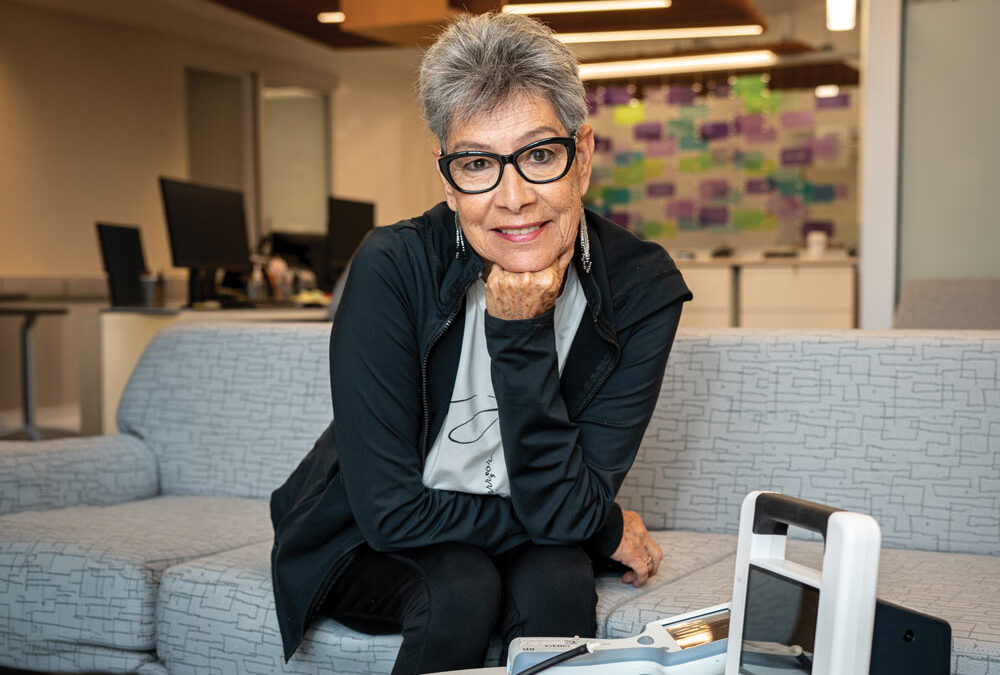
Cathy Woods, a member of Naicatchewenin First Nation, a founding patient partner of the Can-SOLVE CKD Network, national patient lead for Kidney Check and co-chair of the Indigenous Peoples' Engagement and Research Council, has helped guide the program since its earliest days.
"Right from the beginning, we decided it would be a wellness program," says Woods. "We try not to focus too much on the burden of chronic kidney disease. We try to concentrate on helping you understand your risk and the different supports that are available."
That philosophy influences every aspect of Kidney Check.
Bringing Care to the Community
Rather than asking people to travel long distances for screening, Kidney Check brings preventive care directly into communities using portable point of care equipment that provides results in minutes.
Participants are screened for kidney disease, diabetes and high blood pressure. The Kidney Failure Risk Equation, developed by Dr. Tangri, is embedded in the process to assess each participant's risk of kidney failure. In partnership with pediatric nephrologist Dr. Allison Dart, the program has developed screening processes for children as young as 10, creating broad opportunities to identify risks early.
From a single visit, participants receive their results, education about kidney health and a personalized follow-up plan. By partnering with Keewatinohk Inniniw Minoayawin Inc. (KIM), the project is able to refer many participants who don't have a primary care physician to KIM's physician assistant.
"We're really diligent about making sure people get the follow-up care they need," says Harasemiw. "We don't just go into a community, do screening and then leave. Through our partnerships, we're able to help connect people with ongoing care."
The work begins long before the screening clinic opens.
"We do a lot of engagement leading up to the screening," Harasemiw says. "We meet with Health Directors and Chief of Councils. Sometimes we'll hold town halls to build awareness and trust. Afterwards, we report back to communities on how many people were screened, what we learned and what comes next."
Bringing Kidney Check to communities is vital because kidney disease often develops without symptoms.
"I wasn't sick. I had no symptoms," Woods says of her own diagnosis. "I think the hardest part of kidney disease is that it's really invisible. That's why it's so important to get this information to people."
With permanent provincial funding now in place and growing adoption across Canada, Kidney Check is entering a new phase focused on expanding awareness, increasing access and reaching even more communities. The model developed by the CDIC for Manitoba is becoming a blueprint for more equitable healthcare across the country.