
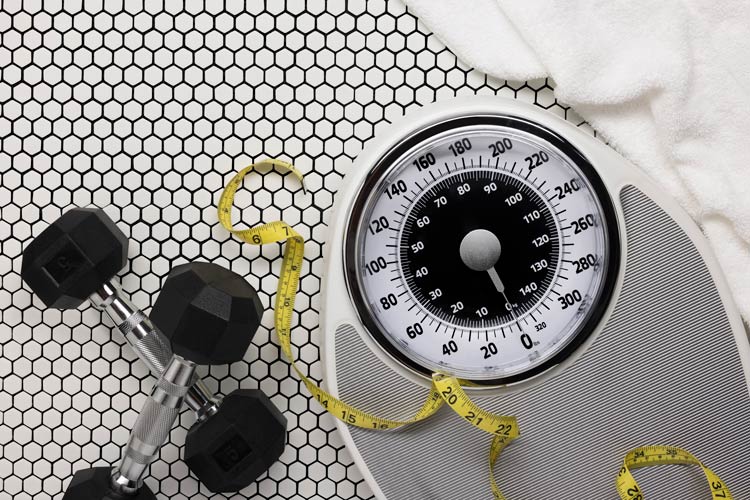
At a Certified Medical Fitness Facility like The Wellness Institute, assessing progress goes far beyond watching a single number go up or down. Personal Trainers, Kinesiologists, and Clinical Exercise Physiologists (CEPs) use clinical-grade measurements, functional testing, and ongoing workout tracking to meet you where you are in your journey. You do not need a specific fitness baseline to join and get the benefits. By looking at the full picture of your health, we can measure gains in functional ability, body fat percentage, and muscle density at a clinical level, so you have valid data confirming your hard work is paying off.
Why Stepping on a Bathroom Scale Is Not Enough
Relying solely on a bathroom scale or a basic consumer fitness tracker often leaves people feeling frustrated. When you start a new strength and conditioning routine, you may lose body fat while gaining lean muscle mass and increasing bone density. On a standard bathroom scale, those changes might cancel each other out, making it look like nothing is happening even though your body is becoming significantly healthier.
By doing more in-depth fitness tracking and offering multiple assessment options, medical fitness professionals remove the guesswork. Detailed assessments show you how your body is responding internally and functionally. Certified specialists and a hospital-connected team interpret your data, so you can make honest, informed adjustments to your exercise prescription and nutrition plan with complete confidence.
Establishing Your Baseline: The Annual Health and Wellness Assessment
Every productive fitness journey starts with knowing where you stand today. At The Wellness Institute, members receive an annual Health and Wellness Assessment with their membership, plus complimentary follow-up assessments three months after the initial appointment and every following year.
During this one-on-one appointment with a Wellness Consultant or Clinical Exercise Physiologist (CEP), several core baselines are measured to evaluate your current fitness and identify potential health risks:
- InBody Composition Scan: Rather than just measuring total weight, the InBody scan breaks down your body composition, including skeletal muscle mass, body fat percentage, and fat distribution.
- Basal Metabolic Rate (BMR): This measurement estimates how many calories your body burns at rest, giving you a practical baseline for managing weight and nutrition goals.
- Blood Pressure Monitoring: Checking resting blood pressure helps identify cardiovascular risk factors and ensures your exercise intensity is safe and appropriate.
- Strength, Flexibility, and Balance Testing: Functional physical tests measure your muscular strength, joint mobility, and stability and compare your results with peers in your age group.
- Aerobic Fitness Testing: Assessing your cardiovascular endurance helps establish safe heart rate zones and stamina baselines.
Following the assessment, your Wellness Consultant completes a personalized Exercise Prescription appointment. This gives you a clear roadmap for where to start, how to navigate health challenges or movement limitations, and which metrics to watch at your three-month follow-up.
Advanced Clinical Testing: DEXA Scans, RMR, and VO2 Max
For individuals who want deeper clinical insight into body composition, bone health, metabolism, or athletic performance, DEXA scans and body composition testing offer gold-standard physiological measurements. You can book these specialized tests individually or as part of combined assessment packages, with optional consultations with a Clinical Exercise Physiologist or Registered Dietitian.
DEXA Body Composition Analysis
A DEXA (dual-energy X-ray absorptiometry) scan is the gold standard for evaluating body composition. During a 30-minute appointment, the scan provides an exact breakdown of your fat mass, lean muscle mass, and bone mineral density. It also maps fat distribution across specific regions, including the arms, legs, android (waist), gynoid (hips), and visceral (abdominal) fat. Tracking visceral fat is especially important in medical fitness because elevated visceral fat is closely linked to metabolic issues, cardiovascular disease, and type 2 diabetes. By completing a follow-up DEXA scan within six months, you can verify that you are losing harmful visceral fat while preserving or building lean muscle and bone density.
Resting Metabolic Rate (RMR) Analysis
If you want to go beyond estimated calorie equations, a clinical RMR analysis is the gold standard for determining your exact caloric needs. This simple, non-invasive test analyzes your breathing over 10 minutes while you relax. It reveals how many calories your body burns at rest and your overall metabolic rate, giving you and your care team accurate data for sustainable weight loss, muscle gain, or maintenance.
VO2 Max Testing
VO2 Max (maximal oxygen consumption) measures your body’s top capacity to extract, transport, and utilize oxygen during exercise. A higher VO2 Max means your heart and lungs deliver oxygen to your muscles more efficiently, which translates directly into better endurance and long-term cardiovascular health. Clinical Exercise Physiologists use VO2 Max testing to establish precise heart rate training zones and track improvements in aerobic capacity over time.
Day-to-Day Tracking and Ongoing Coach Support
Milestone assessments at three, six, and twelve months provide big-picture validation, but results come from what happens between those appointments. Medical fitness tracking combines daily workout data with consistent professional guidance.
Connected Equipment and App Logging
Inside the facility, our connected cardio equipment and The Wellness Institute App (available for iPhone/iOS and Android) allow you to track individual workouts in real time. You can capture detailed metrics from your cardio sessions and log strength exercises throughout your workout by scanning equipment QR codes or recording sets, reps, and weights on free weights and resistance machines. Watching your training volume, resistance loads, and cardio endurance climb week over week provides immediate feedback that your capacity is growing.
Structured Accountability with Coach+
For members who want more guidance, accountability, and support in reaching their fitness goals, our Coach+ membership combines our existing fitness offerings with dedicated coaching and clinical assessments to help you build consistency. Coach+ includes:
- DEXA Progress Tracking: An initial 30-minute DEXA scan to assess body composition and establish a clinical baseline, plus a repeat DEXA scan after six months to track exact changes in muscle mass, fat mass, and bone density.
- Initial 30-Minute Coaching Session: Individualized exercise recommendations based directly on your DEXA results, current fitness level, and personal goals.
- Bi-Weekly Coach Check-Ins: Regular 15-minute follow-ups every two weeks with a dedicated coach to review progress, troubleshoot barriers, and keep you on track.
- Unlimited Group Training and Full Facility Access: Access to our structured group training classes alongside full access to The Wellness Institute’s fitness facilities, pool, and workout floor.
Beyond the Numbers: Real-World Medical Fitness Victories
In a medical fitness setting, some of the most meaningful progress is measured in daily life and clinical bloodwork. Whether someone is recovering from surgery, managing a chronic condition, or working to regain independence, our multidisciplinary teams look at functional and clinical outcomes alongside physical test scores.
Rebuilding Independence After Heart Surgery
When a client enters our Cardiac Rehabilitation or Pulmonary Rehabilitation programs pre- or post-surgery, initial progress is measured carefully to ensure safety. Take Jemalyn’s story of recovering after heart surgery. When Jemalyn started Cardiac Rehabilitation two months after spending a month in the hospital for heart surgery, she was dealing with weakness, dizziness, and back pain.
Instead of rushing into heavy weights, her cardiac rehab team helped her build a safe, structured routine and provided nutrition education to reduce sodium intake. Her progress showed up in clear functional milestones:
- After one month: Noticeably improved physical strength and reduced back pain.
- After two months: Regained the mobility and strength to tie her own shoes without assistance and carry everyday items on her own.
- After completing the program: Built enough stamina to return to work and discovered that regular exercise regulated her blood sugar even more effectively than diet adjustments alone.
Sustainable Weight Loss and Clinical Risk Reduction
For individuals seeking comprehensive weight management support, our Weight Loss and Risk Reduction Clinic brings together clinical doctors, Registered Dietitians, and exercise professionals. In Nike’s journey at the Weight Loss and Risk Reduction Clinic, progress never came from extreme diets or unsustainable hours in the gym.
Working with her multidisciplinary team, Nike lost over 60 pounds during the core program at a healthy, steady pace of 1.7 pounds per week, eventually surpassing 80 pounds of total weight loss. Just as important as the scale weight were the clinical and functional markers she tracked along the way:
- Improved A1C blood sugar levels verified through clinical lab work.
- Noticeable changes in how her clothing fit.
- Functional stamina to carry her 40-pound toddler up the stairs with ease.
- Learning how to identify life barriers and adapt her exercise routine without judgment.
Functional Strength and Life-Changing Confidence
Even when working one-on-one with a Certified Personal Trainer, progress is measured by how strength in the weight room translates to freedom in the real world. In our feature on Chris’s one-year transformation to fitness and strength, 73-year-old member Chris Chubaty-Ring started her journey after experiencing grief and prior hospital admissions for heart failure.
Chris began with chair yoga three times a week before connecting with Personal Trainer Lori Orchard to safely incorporate resistance training with proper form. By tracking her functional strength session by session, her progress over one year was extraordinary:
- Movement Progression: She started with a basic chair sit-to-stand movement and progressed to leg pressing 500 pounds for five to six repetitions.
- Body Composition: She lost 100 pounds, dropped seven clothing sizes, and built visible muscle definition and lean mass she had never had before.
- Real-Life Milestones: At age 73, she mowed her own lawn all summer, took beginner swim lessons, went kayaking for the first time, and easily hoisted her own luggage into the overhead bin on a flight to Hawaii.
How to Start Tracking Your Own Fitness Progress
You do not need to wait until you “get in shape” to measure where you are at. The best way to start is with a Wellness Institute membership and the included baseline Health and Wellness Assessment at the start of your journey.
Use your initial InBody scan, blood pressure check, and functional movement tests to establish your starting point. Track your daily workouts on the floor using our connected cardio equipment and The Wellness Institute App, and use your three-month and annual follow-up assessments for realistic, clinical feedback on your progress. When you can see your body getting healthier through muscle gains, fat loss, and improved function, you have the detail you need to make honest adjustments to your approach. From there, if you want to dive even deeper or add extra accountability, you can explore upgrading to Coach+, working with a Personal Trainer, or booking a clinical DEXA, RMR, or VO2 Max package.